

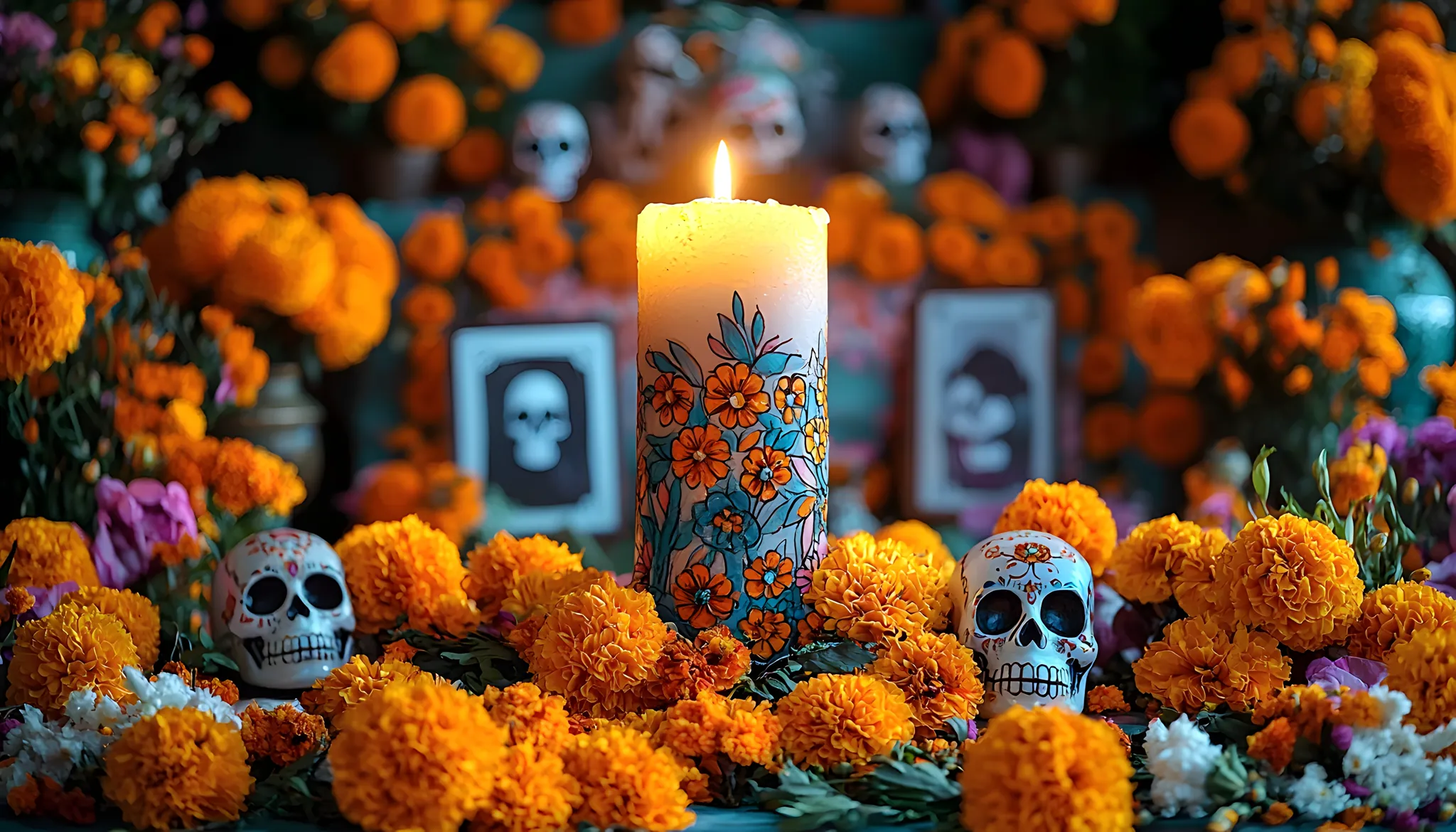
Cancún is famous for beach parties, all-inclusive resorts and nights that end at sunrise. But every year, between October 31 and November 2, the city reveals a side few tourists expect to find. The neon lights of Blvd. Kukulcán give way to wax candles, the reggaetón in the clubs fades out to make room for sones jarochos and Yucatecan jaranas, and the scent of sunscreen mingles with the thick aroma of copal rising from hundreds of altars set up in parks, hotels and on street corners.
It isn't a contradiction. It's proof that Cancún is much more than a tourism brand. It is a Mexican city with deep Maya roots and a local population that carries these traditions in its blood.
Parque de las Palapas: The Heart of the Celebration
If you want to experience Cancún's real Day of the Dead, you have to leave the Hotel Zone and walk to Parque de las Palapas, in Supermanzana 22. This is the quintessential gathering place for the people of Cancún, and during the Days of the Dead it is completely transformed.
The community altars cover dozens of square meters. Schools, neighborhood associations, art collectives and entire families compete to build the most elaborate ofrenda. There are seven-tier altars with photographs of grandparents who migrated from Yucatán, Tabasco or Veracruz to build this city from scratch in the 1970s. There is black mole, pan de muerto dusted with sugar, chaya tamales, mukbil pollo buried under hot coals, and hot chocolate with cinnamon handed out by the women of Mercado 28.
Live music starts at sunset and doesn't stop until midnight. Yucatecan trova groups trade sets with Spanish-language rock bands and troupes of giant skulls that parade through the surrounding streets. The lines for catrina face-painting workshops stretch two blocks, and children run among the ofrendas with their faces painted black and white, happy and unafraid, because in Mexico death holds no fear.
Plaza de la Reforma and the Hotel Zone
Plaza de la Reforma, in the heart of downtown, hosts its own festival with ephemeral art exhibits, carpets of painted sawdust featuring skull designs, and folk dance performances. It is a more intimate event than the one at Las Palapas, ideal for those who prefer to take it all in without the crowds.
In the Hotel Zone, the big resorts have learned to join in respectfully. Lobbies fill with monumental altars designed by local artists, and some hotels host themed dinners where Mexican chefs prepare the dishes traditionally placed on the ofrendas. Blvd. Kukulcán wakes up adorned with cempasúchil marigolds and papel picado banners, and sunsets over the Nichupté Lagoon take on a different hue when you watch them through glowing candles.
El Meco and the Maya Roots
Just a few kilometers from downtown, the El Meco archaeological site offers a quiet reminder that this land was Maya long before any hotel existed. During Day of the Dead, some local communities hold Hanal Pixán ceremonies near the archaeological sites, connecting the mestizo celebration with the Maya spiritual calendar.
Hanal Pixán, which means "food of the souls" in Yucatec Maya, divides the days according to who returns from the beyond: children arrive on October 31, adults on November 1, and all the souls bid farewell together on the 2nd. Families prepare mukbil pollo, a giant tamal cooked underground for hours, and share it with neighbors and visitors alike.
Living It as a Resident, Not a Tourist
The tourist passes through Parque de las Palapas, snaps a photo of the altar and heads back to the hotel. The resident brings their own candles to the condo's altar. They learn from their Yucatecan neighbor how to put together a proper ofrenda, with its glass of water, its salt, its bread and the photo of the loved one who is gone. Their kids come home from school explaining who José Guadalupe Posada was and why La Catrina wears a hat.
The residential areas near Parque de las Palapas, Supermanzana 42 and the developments along Blvd. Kukulcán offer exactly that combination: the comfort of the Mexican Caribbean with the cultural depth of a city that has far more to offer than beaches.
More Than Sun and Sand
Cancún isn't just a vacation destination. It is a young city built on ancient land, and Day of the Dead proves it every year with a celebration that blends the contemporary and the ancestral in ways you won't find anywhere else.
At L'Agence, we help you find your property in Cancún, whether in the Hotel Zone, Supermanzana 42 or the residential developments downtown. Because buying here isn't just investing in oceanfront square meters; it's choosing a place where life has layers you can only discover by living it.
You may also be interested in: Day of the Dead in the Riviera Maya: Experience the Tradition from Your Caribbean Home and Christmas and New Year's as a Homeowner in the Mexican Caribbean.
Why L'Agence
Over 10 years guiding buyers from around the world in the Riviera Maya, from search to closing. Trilingual team and AMPI members.
+210 listed properties · 4.9★ on Google · +30 properties under management
Talk to an advisor